
Wood · Care Guide
MDF
Engineered fibre, perfectly flat and entirely uniform

Maintained As
Veneer & Engineered Panel
Very smooth and even. Lacquered panels have a uniform sheen with no grain tooth at all.
Durability
Everyday resilience
Excellent against warping and everyday wear. Poor against standing water at edges and seams, and effectively unrepairable if the veneer is sanded through.
In the Collection
0 pieces
Every piece we carry in mdf, cared for the same way.
About This Material
Medium-density fibreboard is wood fibre bonded under heat and pressure into a panel with no grain and no direction at all. That uniformity is exactly why it is used for painted and lacquered furniture: it takes a finish more perfectly flat than any timber can.
How To Spot It
A smooth, grainless edge with a fine uniform texture, noticeably heavier than solid timber of the same size.
Perfectly flat, dimensionally stable panels with grain that stops at the edge banding rather than wrapping around it. No seasonal movement.
Specific To MDF
MDF's weakness is unambiguous — it swells irreversibly when wet and cannot be dried back. Any breach in the finish at an edge or around a fixing is a genuine vulnerability.
At A Glance
How it holds up
Each bar shows how well mdf resists that stress — five means it shrugs it off, one means it is the first thing to damage the surface.
Typically Used For
What It Does Well
- Perfectly flat with no grain to telegraph
- Takes lacquer better than any timber
- Consistent and inexpensive
What To Accept
- Swells irreversibly when wet
- Heavy for its strength
- Fixings strip if reworked
Daily Care
The everyday routine
- Dust with a dry or barely-damp microfibre cloth.
- Wipe spills immediately, paying particular attention to edges and seams where the core is exposed.
- Use coasters and placemats — this surface cannot be sanded and refinished the way solid timber can.
- Keep the surface clear of grit, which scratches lacquer easily.
Deep Cleaning
Step by step
- 01 Dust the whole piece first so you are not grinding grit into the finish.
- 02 Wring a microfibre cloth in warm water with a drop of pH-neutral soap until it is only slightly damp.
- 03 Wipe in straight overlapping passes, keeping water away from edge banding and seams.
- 04 Dry immediately with a clean cloth — do not let any moisture sit at a joint.
- 05 Buff a high-gloss lacquer with a dry microfibre cloth to clear smears.
Safe To Use
- pH-neutral soap heavily diluted in warm water
- Dedicated lacquer or laminate cleaner
- Clean, soft microfibre cloths
Never Use
- Furniture oil and wax — they cannot penetrate a sealed panel and leave a sticky film that attracts dust
- Solvents including acetone, white spirit and alcohol, which soften lacquer on contact
- Any abrasive cream, powder or pad
- Melamine foam erasers, which permanently dull a matte lacquer
- Steam, and any cloth wet enough to drip
Stain Removal
Lift it without making it worse
Blot rather than rub, and test any treatment somewhere out of sight first.
Wipe with a barely-damp cloth and neutral soap, then dry at once. Lacquer is non-porous, so a prompt wipe leaves nothing behind.
A drop of washing-up liquid in warm water on a barely-damp cloth. Rinse with a second damp cloth and dry immediately.
Try neutral soap first. If it will not shift, stop — solvents dissolve lacquer and will leave a dull crater far more visible than the mark.
Dry it immediately and thoroughly. Once moisture reaches an MDF core the panel swells irreversibly, so this is a prevention problem, not a cleaning one.
Warm soapy water and patience. Let it soften rather than scraping.
Blot, clean with diluted neutral soap, dry thoroughly and check that nothing has run into a seam or under an edge.
Prevent Damage
What actually causes the harm
- Moisture
- The single greatest threat. Never let water stand, especially at edges, seams and around sink or bathroom placements.
- Heat
- Trivets always. Heat can soften the adhesive bonding the veneer and cause it to bubble.
- UV
- Real-wood veneer fades faster than solid timber because there is no depth of colour to lose. Keep out of direct sun.
- Scratches
- Felt pads under everything. A scratch through the veneer exposes the core and cannot be sanded out.
- Point loads
- Avoid concentrated weight in the middle of a long unsupported span — engineered panels sag over time.
- Humidity
- Keep out of consistently damp rooms; the core will swell at any unsealed edge.
Never Do This
Damage that cleaning cannot undo
Each of these changes the surface permanently.
Sanding a scratch
Veneer is often under a millimetre thick. Sanding goes straight through to the core and the damage becomes permanent.
Acetone, alcohol or white spirit
They dissolve lacquer instantly, leaving a dull etched patch.
Melamine foam erasers
Abrasive. They burnish matte lacquer to a shiny patch that cannot be blended back.
Furniture oil or wax
Nothing absorbs. You are left with a tacky film that holds dust.
Standing water at an edge
The core swells and lifts the veneer. There is no repair short of replacing the panel.
Steam cleaners
Heat plus moisture is the exact combination that delaminates veneer.
Repair
Putting it right
Work a little PVA wood glue under the lift with a cocktail stick, press flat, protect with baking paper and clamp gently overnight.
Fill with a colour-matched wax repair stick and level it flush with a plastic card. Do not sand.
A lacquer touch-up pen matched to the finish. Test somewhere hidden first.
Slit the bubble along the grain with a scalpel, work glue in, press flat and weight it until dry.
Not repairable. The panel needs replacing.
Maintenance Schedule
A rhythm worth keeping
- daily
- Wipe spills at once, especially near edges.
- weekly
- Dry dust.
- monthly
- Inspect edge banding and seams for lifting or swelling.
- quarterly
- Damp clean with neutral soap and check that all felt pads are intact.
- annually
- Check the fixings where the top meets its base, and look for sagging across an unsupported span.
Where To Put It
Indoor placement
Veneer and engineered panels are dimensionally stable but their edges are not waterproof. Keep them dry and they last decades.
Site It Like This
- Site away from sinks, bathrooms, utility rooms and anywhere condensation forms.
- Support a long top across its middle — engineered panels sag where nothing carries the span.
- Keep the piece out of direct sun; veneer fades faster than solid timber.
- Wipe any spill at an edge or seam immediately.
Not Here
- Damp basements, garages and unheated outbuildings.
- Directly beneath a window that is left open.
- Radiator tops, where heat can soften the adhesive and bubble the veneer.
- Rooms where the piece will be repeatedly dismantled and rebuilt.
Weekly Care
The five-minute routine
Dry dust.
Then monthlyInspect edge banding and seams for lifting or swelling.
Common Questions
What owners ask us
No — and this is the single most important thing to know about veneer. The wood layer is often under a millimetre thick, so sanding goes straight through to the core and the damage becomes permanent. Use a colour-matched wax repair stick instead.
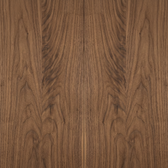
Look at an edge. Solid timber's grain wraps around it; veneer stops at a thin applied edge band. Mirrored or repeating grain across a wide panel is another giveaway — that is book-matching, which solid timber cannot do.
Not really. Once moisture reaches an MDF or chipboard core it swells irreversibly and lifts the veneer above it. The panel needs replacing. This is why edges and seams matter more here than anywhere else.
No. Nothing absorbs into a sealed panel, so the oil sits on top as a tacky film that collects dust. A barely-damp cloth with a drop of pH-neutral soap is all it needs.
Work a little PVA wood glue underneath with a cocktail stick, press it flat, protect it with baking paper and weight it overnight. Catch it early — a lifted edge catches on things and tears further.
Not inherently. Veneer lets us use figure from logs that could never be afforded in solid form, and it stays flat where solid timber would cup. It simply asks for prevention rather than repair, because it cannot be refinished.
Lifespan & Ageing
How it will look in ten years
With Proper Care
Ten to twenty years looking essentially as new, provided edges stay dry.
With Poor Care
Three to five years before swollen edges, lifted veneer or scratched-through patches take hold.
How It Ages
Real-wood veneer mellows in tone much like solid timber. Lacquered panels do not develop patina — they either stay as-new or show wear, so prevention matters more here than with any other surface.
MDF Specifically
The finish ages; the core does not change unless moisture reaches it, at which point the swelling is permanent.
Related Materials
Cared for the same way
These share mdf’s maintenance regime, so the same routine applies to all of them.

Not Sure
We will check it for you
If you are unsure which material your piece is, or you have a mark you would rather not experiment on, tell us the piece and what you are unsure of; when we reply, you can attach photographs.
Ask us