
Glass · Care Guide
Glass
Clear, frosted or tinted glass

Maintained As
Glass
Smooth and cool. Fluted and reeded glass has a directional relief that traps dust in its grooves.
Durability
Everyday resilience
Very high against chemicals and staining. Vulnerable at edges and corners, where a chip can propagate into a full break.
In the Collection
10 pieces
Every piece we carry in glass, cared for the same way.
About This Material
Glass may be clear, tempered, tinted, opal or coated, and the product page names the type wherever it is specified. The routine below is conservative and safe for any glass surface, from a table top to a lamp's shade or diffuser.
How To Spot It
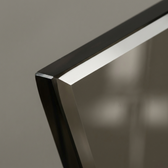
Check for an etched safety mark in a corner, which indicates tempering. Look at a cut edge to see whether colour runs through the body.
Tempered glass is four to five times stronger than annealed and breaks into small blunt granules by design. Tinted and smoked glass carries colour through its full thickness.
Specific To Glass
Treat any unidentified glass as though it were coated: spray the cloth rather than the glass, and use an ammonia-free cleaner. That approach is safe for every type. On a lamp, switch it off and let it cool first.
At A Glance
How it holds up
Each bar shows how well glass resists that stress — five means it shrugs it off, one means it is the first thing to damage the surface.
Typically Used For
What It Does Well
- Chemically inert and never stains
- Visually weightless
- Easy to clean
What To Accept
- Thermal shock cracks it
- Shows every fingerprint
- Edges are the weak point
Daily Care
The everyday routine
- Wipe with a microfibre cloth, dry for dust and lightly damp for marks.
- Lift fingerprints as they appear.
- Use coasters — not to protect the glass, but to prevent ring marks and reduce the risk of thermal shock.
- Sweep dust from the grooves of fluted glass with a soft dry brush.
Deep Cleaning
Step by step
- 01 Switch a lamp off and let the glass cool completely before you touch it.
- 02 Dust first, so grit is not dragged across the surface.
- 03 Spray glass cleaner onto the cloth, never directly onto the piece — overspray runs into fittings and, on a lamp, toward the lampholder.
- 04 Wipe in straight overlapping passes rather than circles, which leave visible swirls.
- 05 Finish with a dry microfibre cloth buffed to a streak-free clarity.
- 06 Clean fluted glass along the grooves with a soft brush or cloth-wrapped chopstick.
- 07 Dry the edges and any metal fittings thoroughly before switching the lamp back on.
Safe To Use
- Ammonia-free glass cleaner — essential on coloured, opal and coated shades
- A 50:50 white vinegar and water solution on plain glass
- Microfibre cloths
- A soft brush for fluted and textured profiles
Never Use
- Ammonia-based cleaner on a coloured or coated shade, which attacks the coating and the fittings
- Spraying cleaner directly onto a lamp, where liquid can run into the lampholder
- Cleaning glass while the lamp is hot
- Abrasive pads and powders
- Razor blades and metal scrapers on coated or tinted glass
- Very hot water on cold glass, or the reverse
Stain Removal
Lift it without making it worse
Blot rather than rub, and test any treatment somewhere out of sight first.
Ammonia-free glass cleaner on a microfibre cloth, buffed dry with a second cloth.
A 50:50 white vinegar and water solution left for a minute, then rinsed and dried. Keep it off metal collars and fittings.
Washing-up liquid in warm water, then a glass cleaner pass to clear the residue.
Soften with a warm damp cloth and lift with a plastic scraper. A blade is only safe on plain uncoated glass, held almost flat.
Usually mineral deposit. Vinegar solution, then rinse and dry.
Dust settles on a warm shade and cooks on. Let the lamp cool, then lift it with a barely-damp cloth and dry at once — this is why a shade is worth dusting more often than a table top.
Warm soapy water first. On plain glass only, a little isopropyl alcohol will shift the rest.
Prevent Damage
What actually causes the harm
- Thermal shock
- Nothing hot straight onto a glass table top, and never clean a glass shade while it is still warm. A sudden temperature difference across a panel can crack it outright.
- Edge impact
- Corners and edges are where tempered glass is weakest. A knock there can shatter the whole panel, sometimes hours later.
- Point loads
- Felt pads under heavy objects, and never stand or sit on a glass table top.
- Moisture in fittings
- Keep liquid away from a lamp's collar and lampholder entirely. Spray the cloth, never the lamp.
- Bulb heat
- Keep to the wattage marked on the lamp. An over-wattage bulb bakes dust onto the inside of a shade and stresses the glass.
- Scratches
- Lift objects rather than dragging. Grit under a ceramic base scratches glass readily.
Never Do This
Damage that cleaning cannot undo
Each of these changes the surface permanently.
Ammonia cleaner on a coloured or coated shade
It creeps under the edge, attacks the coating and corrodes the metal fittings.
Spraying cleaner directly onto a lamp
Liquid runs down into the lampholder. Always spray the cloth instead.
Cleaning a glass shade while it is hot
Cold cleaner on hot glass can crack it, and a wet cloth near a live lampholder is a real hazard.
Anything hot straight onto a glass top
Thermal shock cracks tempered glass without warning.
Abrasive pads
They leave fine scratches that no polishing will remove.
Standing or sitting on a glass top
Tempered glass fails suddenly and completely rather than bending first.
Metal scrapers on tinted or coated glass
They strip the coating and leave a permanent visible track.
Repair
Putting it right
A cerium oxide glass polishing compound will reduce very light scratching. Anything you can catch a fingernail in is permanent.
Have it assessed. A chip in tempered glass compromises the whole panel and it should usually be replaced.
Replace immediately and stop using the piece. Tempered glass with a crack can disintegrate without further impact.
Tighten the grub screws by hand only, in small even turns. Over-tightening a clamp onto glass will crack it.
Tighten by hand only. Over-tightening a clamp onto glass will crack it.
Maintenance Schedule
A rhythm worth keeping
- daily
- Lift fingerprints.
- weekly
- Clean with ammonia-free cleaner sprayed onto the cloth, lamp off and cool.
- monthly
- Brush out fluted grooves, dust the inside of any shade, and dry all edges and fittings.
- quarterly
- Inspect edges and corners for chips, and check that collars and mountings are secure.
- annually
- Check the bulb wattage against what is marked on the lamp, and look over every edge in good light.
Where To Put It
Indoor placement
Glass is chemically inert and easy to live with. The care is all about edges, fittings and thermal shock.
Site It Like This
- Site a table top where the edges will not be knocked — that is where tempered glass is weakest.
- Use coasters, mainly to avoid thermal shock and ring marks.
- Check collars, clamps and mountings are secure a few times a year.
- Spray cleaner onto the cloth, never onto the lamp.
- Fit an LED and keep to the marked wattage so dust cannot bake onto the shade.
Not Here
- Setting anything hot directly on glass — the temperature difference can crack a panel outright.
- Ammonia-based cleaner on anything coloured, opal or coated.
- Cleaning a shade before the lamp has cooled.
- A damp bathroom, where moisture reaches the metal fittings.
Weekly Care
The five-minute routine
Clean with ammonia-free cleaner sprayed onto the cloth, lamp off and cool.
Then monthlyBrush out fluted grooves, dust the inside of any shade, and dry all edges and fittings.
Common Questions
What owners ask us
No. Switch it off and let it cool completely first. Cold cleaner on hot glass can crack it, and a wet cloth near a live lampholder is a real hazard. This is the single most common way a glass shade is broken.
On a plain glass table top, yes. On a lamp's shade or diffuser, use an ammonia-free formula and spray the cloth rather than the glass — ammonia attacks the metal fittings and any coloured or opal coating, and liquid should never run down toward the lampholder.
Yes, more than it looks. A chip compromises the compression that makes tempered glass strong, and panels have been known to fail hours or days later with no further impact. Have it assessed rather than ignored.
With a brush, not just a cloth. The grooves trap dust and cleaner residue that wiping across the surface simply skips over. A soft brush, or a cloth wrapped round a chopstick, reaches the base of each flute.
Very light scratching can be reduced with a cerium oxide polishing compound. Anything you can catch a fingernail in is permanent.
Considerably. It is four to five times stronger than ordinary glass and breaks into small blunt granules rather than shards. It is a legal requirement for glass table tops.
Lifespan & Ageing
How it will look in ten years
With Proper Care
Indefinite. Glass does not degrade — pieces are lost to impact, never to wear.
With Poor Care
Five to ten years for a glass shade cleaned hot or with ammonia, which attacks the fittings and any coloured coating. A table top is almost always lost to a chipped edge instead.
How It Ages
Plain glass does not change at all. A coloured, opal or smoked shade holds its tone indefinitely; only the metal collar around it ages.
Glass Specifically
None.
Related Materials
Cared for the same way
These share glass’s maintenance regime, so the same routine applies to all of them.

Not Sure
We will check it for you
If you are unsure which material your piece is, or you have a mark you would rather not experiment on, tell us the piece and what you are unsure of; when we reply, you can attach photographs.
Ask us